Urban Flash Typeface for Bold Brand Identity
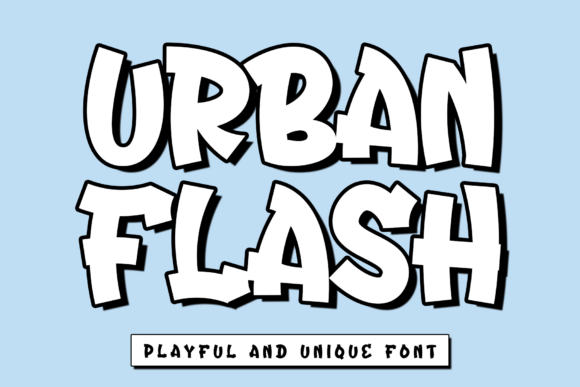
I remember staring at my laptop screen, frustrated by how flat and generic my candle shop’s Instagram posts looked. I had beautiful soy wax candles in hand-poured jars, but the digital presence felt cheap. The labels were fine, but the social media graphics that drove traffic to my online store were a mess of mismatched fonts and dull colors. That was the moment I realized my brand identity needed a serious upgrade. I didn’t need more products; I needed a visual voice that matched the energy of my business. That search led me to Urban Flash, a bold and energetic display font that draws inspiration from street art and comic book lettering. With its exaggerated shapes, thick strokes, and dynamic outlines, it delivers a fun, confident look that instantly grabbed attention.
As a small business owner, I learned quickly that typography is not just about reading words; it is about feeling the brand. Choosing the right typeface can transform a simple product label into a statement piece. Urban Flash became the cornerstone of my rebrand, helping me create visuals that were consistent, polished, and memorable. If you are looking to elevate your own business materials, understanding how this specific font style works in real-world applications is key to making an informed decision.
Urban Flash for Product Packaging and Label Design
When I first downloaded the Urban Flash Display Fonts, I immediately tested them on my packaging mockups. The thick strokes and dynamic outlines of this creative font made my product names pop off the screen and on paper. For a small business selling physical goods, packaging is often the first physical touchpoint a customer has with your brand. Using a font like Urban Flash for packaging design ensures that your product stands out on crowded shelves or in unboxing videos.
I used Urban Flash for the main title on my candle jar labels. Because the font has such strong character, it required very little additional graphic design to look complete. The exaggerated shapes added a layer of personality that a standard sans serif font simply could not provide. However, I learned that readability is crucial even with bold styles. I kept the text short—just the product name and scent—and paired it with a clean, minimal background. This approach ensured that customers could easily read what they were buying while still being drawn in by the vibrant typography. It is important to check the included styles and weights before finalizing your designs, as using the heaviest weight for long paragraphs will hurt readability, but using it for headlines creates impact.
Best Practices for Small Labels and Stickers
- Keep it Short: Use Urban Flash for headlines, logos, and short phrases rather than body text. Its decorative nature is best suited for display text where impact matters more than length.
- Contrast is Key: Since the font has thick strokes, ensure your background color contrasts sharply with the text color. Dark text on light pastel backgrounds worked beautifully for my branding.
- Check Multilingual Support: If you plan to sell internationally, verify that the font includes the necessary character sets for different languages before committing to large-scale production runs.
Urban Flash for Social Media Graphics and Digital Ads
My online shop relies heavily on social media to drive sales. Before finding this font, my promotional graphics looked cluttered and amateurish. Urban Flash changed that by providing a unified visual anchor for all my marketing materials. Whether I was creating flyers for local markets or designing website banners for seasonal sales, the font brought a sense of professional consistency that attracted more clicks.
The font’s inspiration from street art and comic book lettering gives it an urban, youthful vibe that resonates well with modern audiences. When I updated my social media templates to include Urban Flash, engagement went up because the posts felt cohesive. The dynamic outlines helped my graphics stand out in busy newsfeeds. For digital ads, where you have only a second to capture attention, the bold and energetic nature of the typeface acts as a visual hook. It signals confidence and creativity, qualities that potential customers associate with trustworthy brands.
Font Pairing Strategies for Modern Typography
One of the biggest challenges when using a loud font like Urban Flash is balancing it with other elements. I found that pairing it with a clean sans serif font for secondary information created the perfect harmony. The clean lines of the sans serif font grounded the wilder shapes of the display font, making the overall design feel polished rather than chaotic. You might also consider pairing it with an elegant serif font if you want to create a juxtaposition between high-end luxury and edgy attitude, though this requires careful layout work. Avoid pairing it with another handwritten font or script font, as both compete for attention and can make the design look messy. Stick to one creative font per design to maintain clarity.
Urban Flash for Business Cards and Brand Identity Assets
A strong brand identity extends beyond just your products. I redesigned my business cards and thank-you cards using Urban Flash to reinforce my new visual direction. Placing the font on business cards gave my networking events a fresh edge. Instead of a boring corporate card, mine looked like a piece of art that people wanted to keep. The thick strokes ensured that my name remained legible even when printed on textured cardstock.
Using Urban Flash across all brand identity assets—from email signatures to invoice headers—helped build recognition. When every touchpoint feels familiar, customers begin to trust your business more. This consistency is vital for entrepreneurs who want to scale their operations. By investing in a premium font that offers commercial licensing, I avoided legal issues and ensured that my brand assets were ready for any use, from client work to merchandise. Always review the commercial font license terms to understand where you can and cannot use the typeface, especially if you plan to embed it in apps or sell products featuring the font as part of a larger design.
Readability on Mobile Screens and Print
Since most of my customers browse on mobile devices, I paid close attention to how Urban Flash rendered on smaller screens. The dynamic outlines and exaggerated shapes held up well, but I had to adjust the spacing (kerning) slightly to prevent letters from touching too closely on narrow views. For print materials like menus or flyers, I tested the font at various sizes. While it looks stunning at large sizes, shrinking it down too much can cause the intricate details to blur. Therefore, I reserve Urban Flash for prominent headings and call-to-action buttons, using a simpler supporting typography for detailed descriptions. This strategic use ensures that your message is clear, whether viewed on a phone or a printed poster.
Why Urban Flash Elevates Creative Projects
Ultimately, choosing Urban Flash was about more than just picking a pretty font; it was about selecting a tool that aligned with my business goals. The font’s ability to convey energy and fun makes it ideal for industries that want to appear approachable yet bold. Whether you are a boutique owner updating tags, a café creating eye-catching menus, or a marketer designing digital ads, this typeface offers versatility without sacrificing style. By integrating Urban Flash into your workflow, you are not just adding text; you are injecting personality into your brand. The result is a more engaging, professional, and memorable presence that helps your small business compete in a crowded marketplace.