Howdy Monkey Display Font for Modern Branding
I remember the exact moment I realized my online shop looked "cheap." It wasn’t because my products were low quality; it was because my typography screamed inconsistency. I had been using three different fonts across my Instagram posts, product labels, and thank-you cards. One was too formal, one was too childish, and the third was just hard to read on mobile screens. My customers kept asking if I was a professional brand, and honestly, my visual identity didn’t match the care I put into every single item. That was the day I decided to overhaul my brand’s visual language, starting with a single, crucial decision: choosing the right display font.
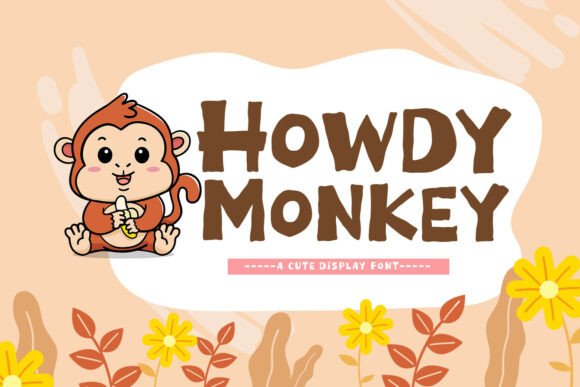
I stumbled upon Howdy Monkey, and it felt like finding the missing piece of a puzzle. This isn’t just another generic typeface; it is a modern and cute display font perfect for posters, logos, magazines, book covers, banners, and many more applications in small business branding. Getting this amazing font allowed me to create lovely designs that actually felt like *me*—warm, approachable, yet polished. If you are an entrepreneur looking to elevate your brand from hobbyist to professional, here is how integrating Howdy Monkey transformed my daily operations and customer perception.
Why Howdy Monkey Elevates Product Packaging Design
For any physical product seller, packaging is your first handshake with a customer. When I redesigned my product boxes, I needed a typeface that could stand out on a shelf but still feel intimate. Howdy Monkey is a modern and cute display font perfect for posters, logos, magazines, book covers, banners, and many more contexts, including tight spaces like product labels. Its rounded, friendly curves immediately soften the brand experience, making it ideal for businesses selling handmade goods, gourmet treats, or self-care items.
The personality of Howdy Monkey brings a sense of joy and creativity without sacrificing legibility. When used for short phrases on packaging titles, such as "Handmade with Love" or "Best Seller," the font draws the eye naturally. Unlike heavy serif fonts that can feel outdated or stark sans serifs that can feel cold, Howdy Monkey strikes a balance. It tells the customer, "This is a fun, thoughtful product." For boutique owners and crafters, this subtle shift in tone can significantly increase perceived value. You don’t need expensive custom lettering to achieve a high-end look; you just need a well-chosen creative font that aligns with your brand’s mood.
Howdy Monkey for Social Media Graphics and Digital Ads
In the digital space, you have less than a second to grab attention. As a small business owner, I spend hours creating content for social media graphics and digital ads. Before switching to Howdy Monkey, my text overlays were often lost against busy backgrounds or looked cluttered. The versatility of this font meant I could use it to create lovely designs that popped on both Instagram stories and Facebook banners.
Because Howdy Monkey is a modern and cute display font perfect for posters, logos, magazines, book covers, banners, and many more uses, it translates beautifully to screen-based design. Whether I am announcing a flash sale, sharing a customer testimonial, or showcasing a new arrival, the font adds a layer of professionalism that generic text editors lack. It helps maintain visual consistency across all platforms, which is key to building brand recognition. When a customer sees the same distinctive typography on their feed, in their email newsletter, and on my website, they subconsciously associate that style with trust and reliability. Using Fonts that have strong character allows marketers to communicate brand values instantly, reducing the cognitive load on the viewer.
Using Howdy Monkey for Logos and Editorial Design
One of the biggest mistakes I made early on was trying to use a decorative font for long paragraphs of text. Typography theory might suggest otherwise, but practical experience teaches us that display fonts shine brightest when used strategically. Howdy Monkey is a modern and cute display font perfect for posters, logos, magazines, book covers, banners, and many more editorial applications where impact matters more than volume.
I used Howdy Monkey primarily for logo design elements and header text. Its unique shape gives a logo a memorable signature that stands apart from competitors who use standard Arial or Helvetica variations. For magazine-style layouts or blog headers, the font adds a touch of whimsy that invites reading. However, I learned quickly that readability advice for small labels and mobile screens requires caution. While Howdy Monkey is excellent for headlines, short phrases, and decorative accents, it should not be used for body copy. Pairing it with a clean sans serif font for longer text ensures that your message is accessible to everyone, including those with visual impairments. This combination of a playful display font and a functional supporting font creates a harmonious hierarchy that guides the reader’s eye effectively.
Font Pairing Strategies for a Cohesive Brand Identity
Choosing a primary font is only half the battle; knowing what to pair it with is what makes a brand look truly professional. When I started designing with Howdy Monkey, I experimented with several combinations before settling on a simple rule: contrast. Because Howdy Monkey has a distinct, rounded, and somewhat informal personality, it pairs exceptionally well with minimalist typefaces.
A clean sans serif font works beautifully alongside Howdy Monkey to ground the design. The simplicity of the sans serif balances the cuteness of the display font, creating a modern typography style that feels current and sophisticated. Alternatively, pairing it with an elegant serif font can add a layer of luxury, perfect for wedding invitations or high-end jewelry brands. Some creators also enjoy mixing it with a script font for handwritten notes, though care must be taken to ensure the styles do not compete. By checking included styles and weights, I found that sticking to two complementary families prevented my designs from looking chaotic. This approach to font pairing is essential for anyone looking to build a scalable brand identity that grows with their business.
Practical Considerations for Commercial Use
Before downloading any asset, it is vital to understand the technical details and licensing terms. Howdy Monkey is designed to be user-friendly, but as a business owner, I always verify file formats, alternates, ligatures, and multilingual support. Ensuring the font supports the characters I need prevents awkward gaps in my text. Furthermore, understanding commercial font licensing is non-negotiable. You must ensure you have the right to use the font on products, packaging, merchandise, templates, client work, or digital downloads.
Investing in a premium font like Howdy Monkey is an investment in your brand’s longevity. It saves time during the design process because the typeface is already curated for aesthetic appeal. Instead of spending hours tweaking kerning and spacing, you can focus on your product and your customers. The result is a more consistent, polished, and memorable brand presence. Whether you are updating your menu, redesigning your stickers, or refreshing your website banners, having access to high-quality Design assets makes the difference between a side hustle and a serious business. Start by exploring how Howdy Monkey fits your specific niche, and watch your brand confidence grow.